
Uncategorized
Illuminati explanation: history, symbols, and modern myths
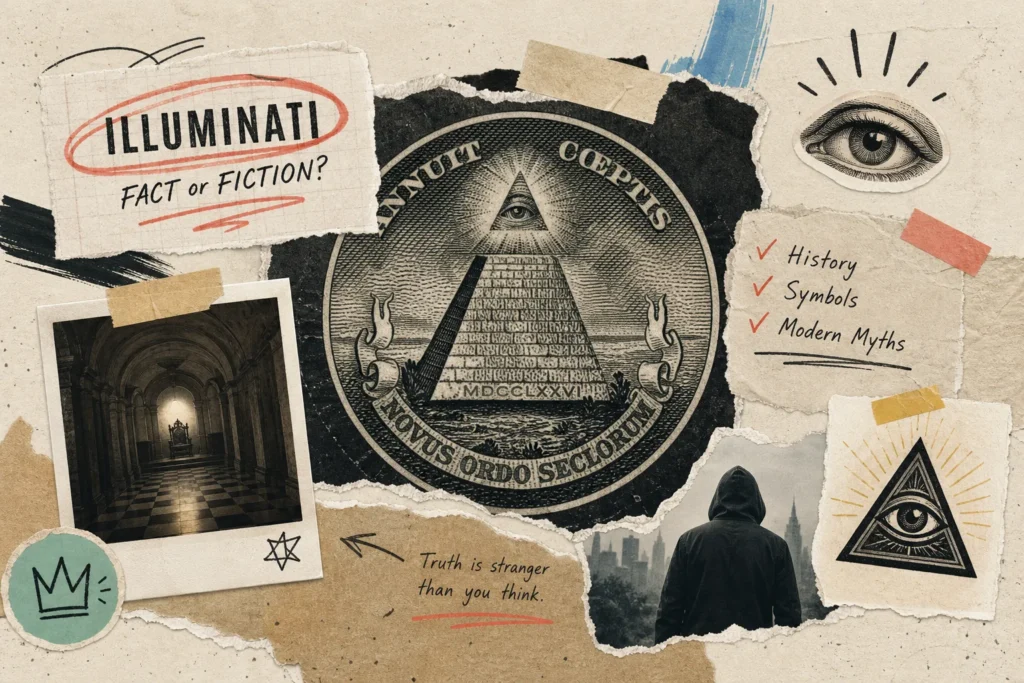
People ask me for a clear explanation of the Illuminati that does not chase shadows. If you’re looking for an illuminati explanation grounded in records rather than rumors, this is it. You deserve one map that separates a documented Enlightenment-era order from the pop-culture conspiracy that borrows its name for clicks and clout. That is exactly what you will get here: straight history, decoded symbols, durable myths addressed, and a quick method you can use to evaluate the next viral claim.
At Illuminati Fraternities, we curate learning for curious minds who enjoy symbols, stories, and initiation-themed culture. Our guides to the Eye, Pyramid, and Eternal Circle, along with our publication Illuminations, offer a structured way to explore a noisy topic for entertainment and personal study, not as academic endorsements. Read on for the core facts, then keep building your literacy with our resources so you can enjoy the aesthetics without getting trapped in the maze.
By the end of this piece, you will be able to summarize the historical Bavarian Illuminati, spot recycled conspiracy tropes, and deploy a five-point verification toolkit on demand. The entertainment will stay entertaining. The truth will stay clear.
What people really mean by “Illuminati” today
A concise Illuminati explanation in one minute
The word refers to two different things. First, a real secret society in 18th-century Bavaria, led by Adam Weishaupt and shaped by Enlightenment ideals. Second, a modern catch-all label for a supposed network of hidden elites that allegedly runs governments, media, and culture.
Confusion happens when these get blended. One is a brief, well-documented historical group. The other is a flexible conspiracy narrative that absorbs new fears and famous faces.
Two entities, one name: order vs memetic myth
Keep the historical order in a separate box from internet folklore. Facts about Weishaupt’s organization live in archives and edicts, with a timeline that starts in 1776 and ends after 1785 (Wikipedia summary with sources). Claims about a timeless, all-controlling cabal belong to the realm of modern mythmaking and entertainment. When you hear “Illuminati” on social media, ask which box the speaker means, history or meme, before you spend hours untangling a moving target.
Where to study responsibly: Illuminati Fraternities resources
If you like symbols and origin stories, study them like an architect, not like a rumor collector. Other platforms often recycle speculation without a stable foundation. Our symbol guides walk through the Eye, Pyramid, Eternal Circle, and light as metaphors, then show how artists remix them today; for philosophy and context, Illuminations gathers enduring ideas from history’s thinkers in an approachable format. These are curated references you can return to so your understanding compounds over time, complemented, not replaced, by independent sources below. Also see our Uncategorized, Illuminati Fraternities category for occasional notes and short updates that don’t fit other pages.
Key takeaway: Historic order and internet myth are not the same thing.
Illuminati explanation: origins, aims, and inner architecture
1776 and Adam Weishaupt in Bavaria
The Bavarian Illuminati began on 1 May 1776 in the Electorate of Bavaria. Its founder, Adam Weishaupt, was a law professor at the University of Ingolstadt shaped by Enlightenment currents in German intellectual life (Britannica: Adam Weishaupt). For a concise reference specifically on the Bavarian order, see the Britannica: Bavarian Illuminati. You can also consult a general biography entry at Adam Weishaupt (Wikipedia). He wanted a disciplined network to advance reform without depending on church or court patronage. This was not sorcery; it was strategy within the politics of its age, when ideas traveled faster in salons than in parliaments. For a narrative treatment of the period and the intellectual context, our Age Of Illumination, Illuminati Fraternities offers a readable timeline and analysis.
Goals and ideology of the Bavarian Illuminati
The order opposed superstition, clerical domination of public life, and abuses of state power. It promoted reason, education, and moral reform, sometimes framed as a pragmatic “religion of reason.” Its ambition was to cultivate enlightened citizens who could influence institutions from within. Reform, not nihilism, sat at the core; the fiery rhetoric of some members reflected the era’s debates, not a plan for global rule (Britannica overview).
Degrees, rituals, and recruitment inside a secret society
The Illuminati organized members into three classes, each with progressive degrees. Early grades like Novice and Minerval prepared recruits; the middle class borrowed Masonic degrees; the higher Mysteries included titles such as Priest, Mage, and King (degree schema summary; FactGrid: Illuminati project). Members used aliases and wrote in cipher, Weishaupt styled himself “Spartacus,” and Adolph Freiherr von Knigge signed as “Philo”, and advanced by passing instruction and surveillance thresholds (Originalschriften des Illuminatenordens, 1787).
Recruitment was selective and leaned on Masonic networks, drawing mostly young, educated men who shared reformist leanings. Rituals emphasized initiation, oaths, and advancement rather than grand public ceremonies.
Who was excluded and why structure mattered
In practice, the order excluded women, Jews, monks, and members of other secret societies (summarized membership limits). Its hierarchy and strict rules served operational security and doctrinal cohesion, even as those rules sat uneasily beside its egalitarian rhetoric. The design reflected the limits of its century, not a timeless charter. Structure kept the circle tight and the message unified, but at the cost of breadth and public legitimacy.
Key takeaway: Aims were Enlightenment reform, not cartoon villainy.
How it ended: bans, seized papers, and the quiet fade
The Bavarian edicts and the 1785 crackdown
Authorities in Bavaria moved against unauthorized secret societies in stages. Edicts in 1784 set the tone; a March 2, 1785 prohibition then struck directly, disrupting leadership and exposing networks (Britannica; documented suppression). Weishaupt lost his position and left Bavaria, removing the group’s organizer-in-chief. These were not rumors. They were government actions on the record.
Confiscated archives that broke secrecy
In 1786 and 1787, officials seized internal papers and correspondence, then published selections to make the case against the order. What had been hidden behind aliases became public text (Einige Originalschriften des Illuminatenordens, 1787; Nachtrag von weitern Originalschriften, 1787). Secrecy collapsed under the weight of its own paperwork, and once the archive surfaced, the mystique turned into a legal file and recruitment momentum stalled.
After 1785: the historical record goes silent
After the crackdown, credible documentation of Weishaupt’s Illuminati activity dries up. By the end of the decade, the order had disintegrated as an organized body. Later claims imagine survival, but the paper trail for the actual Bavarian Illuminati ends in the 1780s (Britannica).
Key takeaway: Documented suppression explains the order’s dissolution.
Symbols and ideals: what the signs meant then and now
The Eye of Providence before the conspiracy frame
The Eye in a triangle has a pre-conspiracy life in Christian art and civic imagery. On the U.S. Great Seal approved in 1782, Secretary Charles Thomson described an eye in a triangle “surrounded with a glory,” meant to allude to divine providence favoring the American cause (U.S. Department of State: Great Seal history). It appears on the dollar because the bill reproduces the Great Seal’s reverse, not because a secret order issued currency (U.S. Currency Education Program: $1 note). For accessible symbolic histories, see the Great Seal site’s treatment of the Eye of Providence and a Masonic explanation at ilmason.org.
Symbols carry histories, and you read them by context, not by assumption.
Pyramid, Eternal Circle, and light as guiding metaphors
The pyramid evokes stability, labor over time, and a foundation that supports higher vision. The Eternal Circle signals unity and continuity. Light stands for knowledge revealed, a classic Enlightenment theme that the Bavarian Illuminati admired but did not invent.
These are metaphors that brands and artists borrow freely. They do not announce clandestine jurisdiction.
Freemasonry crosscurrents and misattribution
Masonic lodges used many of the same motifs, which is why overlaps appear in buildings and books. Shared iconography does not prove shared command. In the 1700s, ideas and images circulated across societies faster than formal charters ever did.
Conflating motifs with management is how myths get legs.
Illuminati explanation, pop aesthetics vs proof of influence
From music videos to fashion drops, triangles and eyes are dramatic and instantly recognizable. Artists use them for spectacle, narrative, or irony, then audiences project meanings back onto the stage. Without verifiable membership records or organizing documents, spectacle is not evidence of allegiance; context, not geometry, carries the meaning.
Key takeaway: Symbols signal ideas, not ownership of governments.
The myth machine: from 1790s pamphlets to social media
Barruel and Robison: print that birthed a global story
After the crackdown, the myth grew in print. Abbé Augustin Barruel’s 1797 history of Jacobinism and John Robison’s 1798 Proofs of a Conspiracy reframed a defunct order as an ongoing threat behind revolution and irreligion. Their books turned a local dossier into a portable narrative template (Barruel, 1797/99; Robison, 1798).
With print authority in place, the story traveled well and adapted quickly.
Partisan weapon in early American politics
In New England, ministers like Jedidiah Morse sounded alarms from the pulpit. Federalist writers used the claim to attack Jeffersonian opponents, warning that secret societies menaced church and state. Fear of the French Revolution’s chaos gave the myth emotional fuel (Morse’s sermons).
The name “Illuminati” became shorthand for everything elites disliked in their rivals.
Cold War anxieties, satire, and pop culture reinventions
Later, anti-communist rhetoric fused with secret-society suspicion, and satire kept the meme alive. The 1970s Illuminatus! Trilogy helped cement the Illuminati as a playful symbol of hidden strings, making it easier for the idea to slip into music, comics, and film (Barkun, A Culture of Conspiracy). Once irony enters, the meme multiplies.
By the late 20th century, the word stopped needing the archive. It needed only a wink.
Platforms, virality, and the New World Order frame
With the internet and social apps, the pattern accelerated. Viral posts mixed globalization angst, “New World Order” rhetoric, and celebrity imagery into bite-size videos. The medium changed, but the plot stayed the same: a simple villain for complex systems.
Memes thrive on repetition. History demands documentation.
Key takeaway: Mediums changed, the template for fear stayed the same.
Your fact-check toolkit for Illuminati claims
Five quick checks that debunk most posts
- Source origin: Who said it first, and can you see the full, unedited source?
- Date alignment: Does the claim’s timeline match documented events from 1776 to the late 1780s or is it projecting continuity without evidence?
- Primary documents: Are there edicts, letters, minutes, or archives, or just screenshots and captions?
- Symbol literacy: Does the symbol have older, public meanings that explain its use without secret coordination?
- Expert consensus: Do reputable historians or reference works agree, or is the claim isolated to conspiracy channels?
Illuminati myths debunked: the big four
- Global control: The Bavarian Illuminati was banned in the 1780s. No credible record shows a surviving command structure (overview).
- Celebrity membership: Accusations rest on stage imagery; several high-profile artists have dismissed the rumors when asked directly, for instance, Jay‑Z and Katy Perry have publicly denied Illuminati ties (SPYSCAPE roundup; Rolling Stone, 2014).
- Dollar bill “proof”: The Eye and pyramid come from the U.S. Great Seal’s 1782 design and signify providence and endurance, not a secret takeover (State Dept: Great Seal; $1 note details).
- Living Weishaupt lineage: After exile and suppression, the historical trail ends. “Lineage” claims lack verifiable documentation (suppression and aftermath).
When symbols are just aesthetics
Assume performance first. If a logo, video, or outfit plays with triangles or eyes, ask whether there is any external, verifiable tie to an organization, such as membership rolls, charters, or correspondence. Without that, you are looking at design choices, not declarations of fealty; context, not geometry, carries the meaning.
Where to deepen your literacy, credibly
If you want a single hub, explore Illuminati Fraternities. Our symbol guides and Illuminations connect iconography to ideas, then to modern aesthetics, without collapsing history into hype. For cross-reference, consult reputable encyclopedias and academic histories to triangulate dates, documents, and degree structures, for example, Britannica, the FactGrid Illuminati project, and the relevant Wikipedia entries with citations. You can also preview our site structure on the Sample Page, Illuminati Fraternities if you want a quick orientation.
If a claim cannot survive those checks, it belongs in the entertainment bucket. Keep the spectacle, drop the certainty.
Key takeaway: Method beats memes. Bookmark this checklist and use it.
Conclusion
Here is the clean lens you can carry forward. There was a finite Bavarian organization founded by Adam Weishaupt in 1776 with Enlightenment goals and a tiered structure. There is also a long cultural myth that recycles its name to explain change, conflict, and celebrity power. Your job is to recognize which you are dealing with, then apply a simple, repeatable method to test claims.
When the next video alleges a global cabal or decodes a music video, run the five checks and see what stands. If you enjoy the symbolism and want a grounded companion as you explore, Illuminati Fraternities offers curated guides, our Illuminations publication, and a community that treats icons with respect and curiosity. For a trustworthy illuminati explanation and its afterlives, make this your base camp and keep your discernment sharp. Read our full Illuminati explanation guide, browse the primary documents linked above, or subscribe for updates. You can also browse broader thematic pieces in our Sample Page, Illuminati Fraternities and occasional notes in Uncategorized, Illuminati Fraternities.
Stay curious, stay methodical, and keep this reference close the next time the Eye appears in your feed.
