
Uncategorized
The Illuminati Organization: Real History vs. Myth
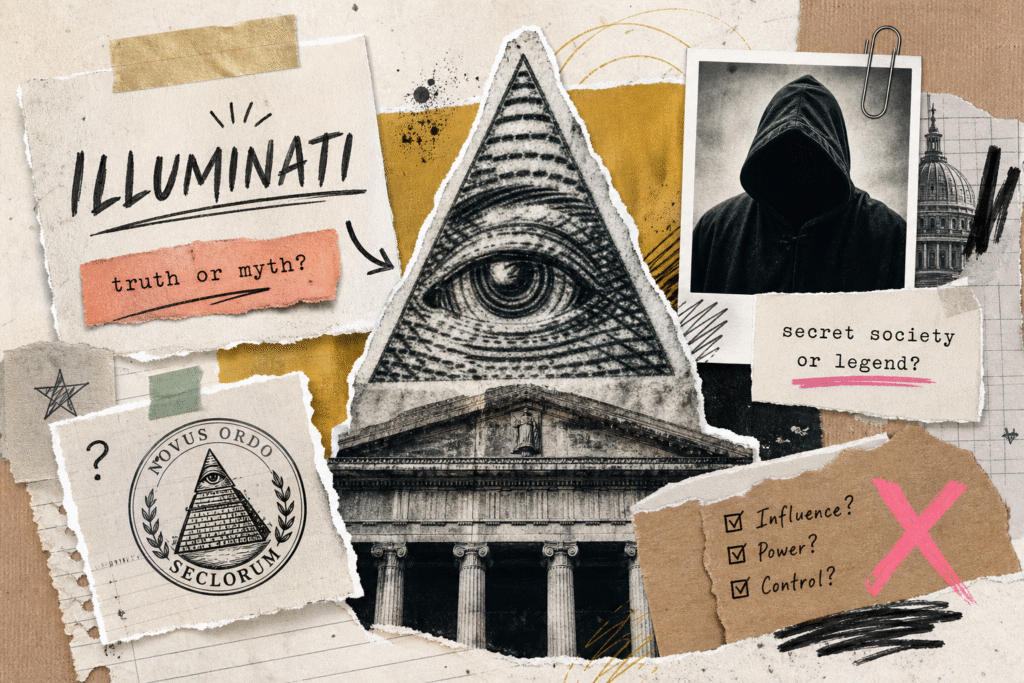
The Illuminati organization has been invoked in music videos, political commentary, and late-night internet rabbit holes for decades. But if someone asked you right now to describe what the Illuminati organization actually was as a formal institution, with specific dates, documented goals, and a named founder, most people go quiet. That gap between cultural saturation and factual knowledge about the Illuminati organization is exactly where conspiracy myths live. This article closes that gap.
The Bavarian Illuminati was a real organization, founded on May 1, 1776, in Ingolstadt, Bavaria, by a professor named Adam Weishaupt. It had documented members, a written hierarchy, a stated philosophical mission, and a specific end date, 1785, when Bavarian authorities formally suppressed it. Every claim built on top of that foundation, shadow governments, celebrity puppetmasters, centuries-spanning cabals, requires its own evidence. Understanding where documented history ends is the only honest way to have any serious conversation about what might exist today.
The Illuminati organization continues to spark debates and discussions about its relevance today. The historical context of the Illuminati organization provides insight into its origins and goals, helping to demystify the myths surrounding it.
The Illuminati Organization’s Founding and the Man Behind It
Weishaupt was no fringe eccentric. He held a professorial chair in canon law at the University of Ingolstadt, one of Bavaria’s most prominent academic posts at the time. His frustration was specific: Jesuit scholars dominated the intellectual life of Bavarian universities, and open dissent against Church or state authority in 1770s Bavaria carried real professional and personal consequences. Challenging that power structure from the outside was a losing move. Weishaupt’s answer was to build influence from the inside.
Understanding the Illuminati organization helps us see its influence on modern culture and politics. The Illuminati organization’s legacy is evident in various conspiracy theories and discussions about elite power structures.
His intellectual framework drew from the Enlightenment thinkers shaping Europe’s educated class. Christian Wolff’s rational philosophy, Locke on toleration and reason, Rousseau on moral reform, Voltaire’s anti-clerical edge, all of these ran through Weishaupt’s founding vision. The date itself matters: 1776 was the year the American colonies declared independence, a moment when Enlightenment ideals were being tested against entrenched authority in real time. The Order of the Illuminati was a product of that specific historical pressure, not a timeless shadow government dropped from nowhere.
How the Order Was Built: Ranks, Code Names, and Deliberate Architecture
The degree structure and what it revealed
The internal structure of the Bavarian Illuminati was more sophisticated than most people imagine. Entry-level members were Novices, who then advanced to Minervals and Lesser Illuminati. Above that sat Masonic-adjacent degrees, Illuminatus Major and Illuminatus Dirigens. The upper mystery classes were Presbyter (Priest), Regent, Magus, and finally Rex (King). Scholarly sources such as Jan Rachold’s 1984 study and the critical edition Die Korrespondenz des Illuminatenordens document this hierarchy in detail, noting that the names and organization evolved over the Order’s lifespan. Only initiates who reached the higher degrees were ever told the full scope of the Order’s goals. This graduated design served two clear functions: it protected the organization from infiltration, and it created a powerful sense of earned belonging at each level.
Recruitment, code names, and notable members
Weishaupt brought in Adolph Knigge as his primary organizer and recruiter, and Knigge expanded the Order dramatically by tapping into existing Masonic lodge networks across German-speaking Europe. Members used code names and symbolic communication, drawn from classical antiquity and Illuminati symbols unique to the Order, to maintain operational security. According to primary source collections including the Korrespondenz, Weishaupt himself operated under the alias “Spartacus.” Notable members and associates included Knigge, Goethe, Johann Gottfried Herder, and Duke Ernest II of Saxe-Gotha-Altenburg. The Illuminati were not a gathering of cranks. They were educated, socially connected men building a deliberate institutional architecture, and this is precisely what distinguishes the historical Illuminati organization from the myth that replaced it.
The historical significance of the Illuminati organization is often overshadowed by myths. By studying the Illuminati organization, we can better understand the dynamics of secret societies throughout history.
What the Order Actually Stood For
Strip away the mythology and the documented aims are straightforward: oppose superstition and religious obscurantism, reduce the Church’s grip on public life, promote reason, virtue, and knowledge, and place Enlightenment-minded men in positions of institutional influence. Weishaupt was not building a criminal organization or a mystical death cult. He was building a rationalist network capable of reforming society from within, using the same gradual, structural approach that entrenched power had always used to maintain itself.
The duality of the Illuminati organization as both a historical entity and a subject of conspiracy theories is fascinating. It reflects society’s ongoing struggle to reconcile knowledge with myth.
The secrecy was not evidence of malice. It was pragmatic survival. Publicly advocating against monarchical and clerical authority in 1770s Bavaria was genuinely dangerous. Organizations operating against prevailing power structures have consistently relied on coded language, private networks, and structured discretion throughout history. The Illuminati’s methods were a direct response to their environment, not proof of world-domination fantasies. This distinction is worth holding onto, because it is the one most commonly erased in popular retellings. Understanding it is central to separating the real Illuminati organization from the legend that grew around its name.
Suppression: How Bavaria Ended the Illuminati Organization by 1785
The edicts and their aftermath
Elector Charles Theodore of Bavaria moved against secret societies in 1784 with a broad edict targeting any organization operating without state authorization. A more specific edict targeting Freemasonry and the Illuminati followed in 1785. Bavarian authorities raided the homes of members including Zwack and Bassus, confiscating internal papers and correspondence. Those confiscated documents, now preserved in Bavarian state archives and documented in the scholarly edition Die Korrespondenz des Illuminatenordens (ed. Markner, Neugebauer-Wölk, and Schüttler), remain the primary evidentiary record of what the Order said and did internally.
The scale of the Order and what suppression actually meant
The Illuminati organization’s documented peak membership is estimated at between 600 and 2,500 people across roughly a decade of operation, based on scholarly estimates by researchers including Reinhard Markner and Jan Rachold, who distinguish between formally initiated members and broader sympathizers. It was not suppressed because it had actually destabilized Bavaria. It was suppressed because an anxious conservative establishment, one that historians of 18th-century secret societies have described as deeply reactive to Enlightenment radicalism, perceived it as a threat. After 1785, Weishaupt fled to Gotha (new research on Gotha), and the formal Bavarian Illuminati ceased to function as a structured body. Any claim of unbroken organizational continuity past this point requires specific evidence, not assumption. That is not a dismissal. It is simply the standard applied to any historical claim.
Post-suppression, the legacy of the Illuminati organization lived on, influencing various narratives in literature and popular culture. Understanding the Illuminati organization today requires examining both its historical roots and its mythologized image.
How Conspiracy Theories Rewrote the Real Story
The transition from documented history to enduring myth has a specific origin point: 1797. That year, John Robison published Proofs of a Conspiracy and Abbé Augustin Barruel published Memoirs Illustrating the History of Jacobinism. Both writers argued that the French Revolution was not a spontaneous political uprising but the result of a coordinated Illuminati-Masonic plot; modern analysis of that claim is summarized in discussions of the French Revolution as an Illuminati conspiracy. Scholars of the period, including modern historians of the French Revolutionary era, have found no credible evidence of active Illuminati involvement in the Revolution. What Robison and Barruel produced was a compelling narrative that gave frightened European conservatives a single, dramatic explanation for decades of destabilizing upheaval. These two books are the direct origin of the modern conspiracy framework, written a decade after the Order had already collapsed.
The impact of the Illuminati organization is felt in contemporary debates about secrecy and power. Analyzing the Illuminati organization reveals insights into how societies perceive authority and control.
The theory evolved in predictable stages. Nesta Webster revived it in the early 20th century, where it merged with antisemitic propaganda and fears about global finance and Bolshevism. The 1960s and 70s counterculture encountered it again through Robert Anton Wilson’s The Illuminatus! Trilogy, which parodied the whole tradition so effectively that it inadvertently made it culturally cool. The internet then transformed the conspiracy into something viral and shape-shifting, attaching it to hip-hop symbolism, celebrity culture, and political anxiety in equal measure.
By the 2010s, a paused frame from a music video showing a triangle was enough to generate thousands of shares. Artists like Jay-Z, Kanye West, and Beyoncé became central figures in the modern mythology, not because of anything they did, but because their success, their visual branding, and the interpretive culture of fan communities combined to create a self-reinforcing decoding game. The Illuminati conspiracy theories circulating today function as cultural shorthand for hidden power, not as a specific historical claim about the Illuminati organization that Weishaupt founded and Bavaria dissolved. That combination of serious belief, marketing tool, and running joke is what keeps the myth alive.
In discussions of modern mythology, the Illuminati organization often serves as a lens through which we examine societal fears about hidden influences. The stories surrounding the Illuminati organization continue to evolve, reflecting current anxieties.
What a Real, Structured Organization Actually Looks Like
The Bavarian Illuminati left a clear blueprint for what a genuine, functioning organization of this type requires: tiered membership with defined advancement criteria, a stated philosophical mission, deliberate outreach to prospective members, published doctrinal content, and an internal communication structure that protects the organization while expanding its reach. These are not mystical requirements. They are the features of any serious institution designed to persist beyond its founders. Weishaupt understood this, which is why the Illuminati organization functioned as effectively as it did for nearly a decade before political pressure ended it.
For those analyzing the structure of secretive groups, the Illuminati organization offers a case study in organizational design and cultural impact. The principles of the Illuminati organization remain relevant in understanding modern institutions.
For those interested in modern organizations that consciously model themselves on this structural heritage, Illuminati Fraternities represents one contemporary example worth examining on its own terms. Its Department of Citizen Outreach serves as a formal channel between the organization and those seeking to understand or join, a role analogous to the recruitment and onboarding function Knigge performed for Weishaupt in the 1780s. Its published philosophical content, which covers frameworks including the Globalist Agenda, the Maze of Existence, and the Pendulum of Power, pursues the kind of doctrinal clarity that characterized Weishaupt’s original writings. Whether or not you accept any metaphysical claims attached to the name, the institutional architecture is deliberate and recognizable to anyone familiar with how serious organizations are built and sustained. It is worth noting, however, that Illuminati Fraternities is a contemporary membership organization and entertainment brand, and the claims here reflect its own public-facing materials rather than independent scholarly verification.
What the Record Actually Shows
The honest answer to the question of what the Illuminati organization really was: a short-lived but structurally sophisticated Enlightenment-era secret society, founded May 1, 1776, suppressed by 1785, and documented in confiscated papers that any serious historian can examine today. The conspiracy legend that followed was built primarily on two books written a decade after the Order’s collapse, then layered over by two centuries of political anxiety, pop culture, and internet amplification. For concise background on the historical group, see the overview of the Bavarian Illuminati.
The facts and the myths are separable. Knowing the difference is exactly the kind of clarity the original Illuminati organization claimed to value. For those curious about what a modern organization built on those same structural principles looks like in practice, the architecture at Illuminati Fraternities is worth examining on its own terms. The illuminated path has always begun with the same first step: understanding what you are actually looking at.
The Illuminati organization serves as a reminder of the power of belief and narrative in shaping public perception. This duality is crucial for grasping the complexities surrounding the Illuminati organization today.
