
Uncategorized
The Illuminati: History, Symbols, and the Myths Behind It
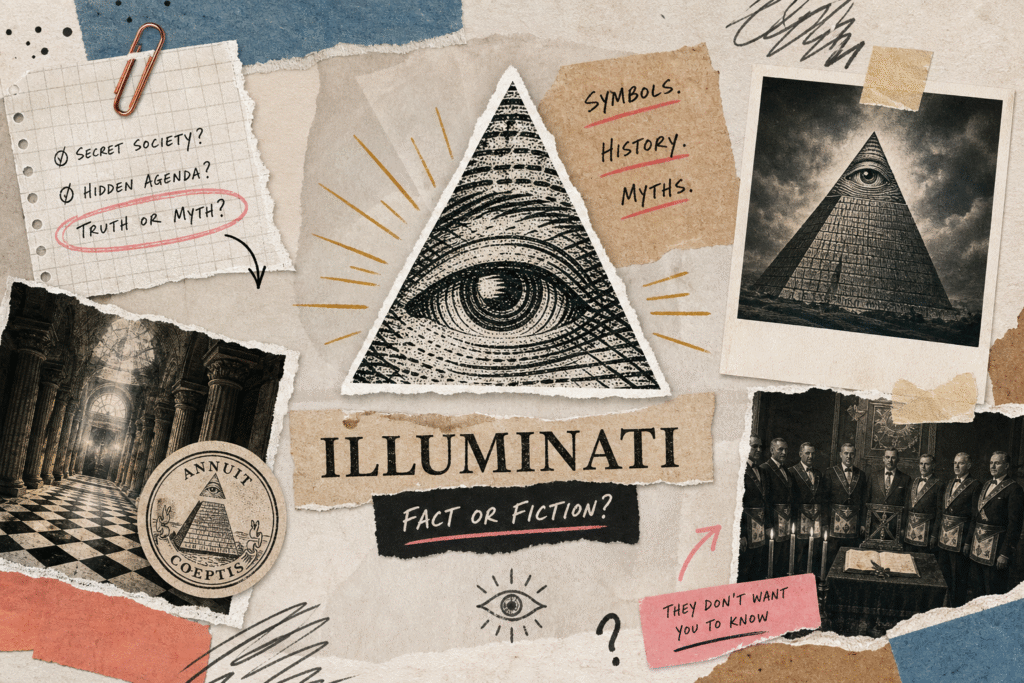
The Illuminati is one of the most documented and most misunderstood organizations in recorded history. A real secret society, founded in 18th-century Bavaria, became the mythological engine behind centuries of conspiracy theories, celebrity rumors, and pop culture obsession. Most people searching for answers never find the actual history, they find layers of mythology stacked on top of it, and they leave more confused than when they started.
Many people are fascinated by the illuminati and often seek out information regarding its historical significance and influence.
Here you’ll find who the original Bavarian Illuminati actually were, which symbols genuinely belong to them versus which ones were borrowed or invented, how a suppressed Enlightenment society morphed into a supposed global shadow government, and why that legend refuses to die. For readers who want to go beyond the documented history and explore the symbolism, philosophy, and living culture of the Order, Illuminati Fraternities serves as the central hub for that deeper journey. Start with the history. The rest follows.
Understanding the illuminati allows for a deeper comprehension of the cultural references that persist today.
The founding of the Bavarian Illuminati: Bavaria, May 1776
Who was Adam Weishaupt and why did he build a secret society?
Adam Weishaupt was a law professor at the University of Ingolstadt, shaped by Enlightenment philosophy and deeply frustrated by the world around him. In 18th-century Bavaria, the Catholic Church held enormous influence over public life, intellectual dissent was dangerous, and the crown tolerated very little challenge to established authority. Weishaupt needed a covert vehicle to advance the ideas he couldn’t speak openly, so on May 1, 1776, he founded the Order of the Illuminati. This was a calculated act by an academic operating under real constraints, not a shadowy power grab by a mystical puppet-master.
Weishaupt aimed to challenge the status quo by establishing the illuminati as a means for intellectual growth.
His philosophical influences read like a roll call of Enlightenment giants: John Locke on reason and rights, Voltaire on the failures of clergy and superstition, Rousseau on social contract theory, Kant on rational autonomy. Weishaupt also adapted the Jesuits’ disciplined, hierarchical organizational model, ironically borrowing the methods of the institution he most opposed. The result was a group designed from the inside out to operate in secrecy while pursuing goals that were entirely ideological.
What the Order actually set out to do
The Bavarian Illuminati had three documented core goals: promote rational thought and the perfectibility of human beings, reduce the church’s influence over public life, and challenge abuses of state power. These were genuinely radical ideas for the era. Consider the third goal alone, challenging state authority in an absolute monarchy meant risking exile or worse, which is precisely what eventually happened to Weishaupt himself. The Order’s ambitions placed it squarely alongside the intellectual currents driving the American and French revolutions happening at the same time. There was nothing supernatural about any of it. The founders wanted a society run by reason rather than superstition, and they believed a curated network of educated, influential men could make that happen.
The ideologies of the illuminati continue to be discussed in modern contexts, illustrating their lasting impact.
Inside the Order: ranks, rules, and how it operated
The hierarchy from Novice to Illuminated Minerval
Each member of the illuminati held a significant role within the society, contributing to its overarching goals.
The Order ran on a three-tier membership structure: Novice, Minerval, and Illuminated Minerval. Advancement was earned, not given. Recruits trained under tutors for extended periods, swore oaths of secrecy and obedience, and used classical codenames in all correspondence. The whole system was designed to build loyalty, test ideological commitment, and ensure that only the right people moved up the ranks. It worked. This structure of initiation and gradual revelation is a timeless feature of esoteric and fraternal organizations, and it is one reason the Order’s organizational model continues to fascinate long after the group itself dissolved.
Who was allowed in, and who wasn’t
Exploring who was eligible to join the illuminati reveals much about its selective nature and purpose.
The membership criteria were specific and reveal a lot about the organization’s actual character. Candidates had to be Christian men, roughly 18 to 30 years old, financially stable, and intellectually promising. The Order explicitly excluded women, monks, Jews, pagans, and members of competing secret societies. This was not a universal brotherhood welcoming all seekers of hidden truth. It was a deliberately curated elite, shaped by the prejudices and practical politics of its time. Knowing that distinction helps separate the historical Bavarian Illuminati from the romanticized, borderless global network that conspiracy narratives describe today.
The 1785 crackdown and the end of the original Order
In March 1785, the Bavarian government issued an edict banning secret societies, targeting the Order directly. Weishaupt was removed from his post at Ingolstadt and banished from Bavaria. Authorities raided the homes of key members, including Zwack and Bassus, confiscating internal correspondence, organizational papers, and doctrinal writings. By 1787, the Bavarian state had published selections from those seized documents, exposing the Order’s internal hierarchy, cipher systems, and membership methods. The organization effectively ceased to exist. This suppression marks the clean break between documented fact and everything that came after it.
The downfall of the illuminati was a significant moment in history, shaping various narratives that followed.
Illuminati symbols decoded: what’s real and what’s invented
The one symbol actually tied to the historical Illuminati
The Owl of Minerva is the only visual symbol with a clear, documented link to the original Bavarian Illuminati. Weishaupt chose it deliberately: Minerva was the Roman goddess of wisdom, and the owl was her emblem, a precise fit for a group that saw itself as an enlightened intellectual vanguard. The symbol carried a specific philosophical meaning within the Order’s self-image and appears in primary historical sources connected to the group. Everything else in the standard conspiracy symbol catalog requires a much longer chain of reasoning to connect back to Weishaupt’s original organization.
Many symbols are mistakenly associated with the illuminati, showcasing the myths that have proliferated over time.
The all-seeing eye and how it got misattributed
The Eye of Providence has its origins in Christian iconography, not Illuminati ritual. By the Renaissance, it was a common religious image representing God’s omniscience, often depicted as an eye inside a triangle representing the Holy Trinity, with rays of light extending outward. It appeared on church ceilings, altarpieces, and devotional emblems across Europe long before 1776. When it appeared on the reverse of the U.S. Great Seal in 1782, it signified divine favor on the new republic, a standard providence symbol, not secret society encoding. The connection between the Order and the dollar bill entered conspiracy folklore much later, through 20th-century pop culture and anti-Masonic suspicion, not through any documented historical link.
The eye is often misattributed to the illuminati, yet its origins lie in much older traditions.
For readers who want to go deeper on this, Illuminati Fraternities maintains a full breakdown of the Eye, the Pyramid, and the Eternal Circle, tracing each symbol’s documented origins and its place within the broader esoteric tradition.
Other symbols commonly claimed and why they don’t hold up
The pentagram, Eye of Horus, goat imagery, and various Masonic emblems are routinely assigned to the Order in conspiracy content, but none of them hold up to historical scrutiny. The Eye of Horus is ancient Egyptian, predating any 18th-century secret society by millennia. The pentagram has pre-Christian origins and dozens of distinct cultural contexts. The pattern across all of these cases is the same: someone found a symbol that felt mysterious, attached it to the Illuminati, and the misattribution compounded over decades until it felt like established fact. Reading symbols critically, asking where they actually came from before accepting what they supposedly mean, is one of the most useful skills anyone exploring this territory can develop.
Understanding the symbolism around the illuminati involves discerning fact from fiction in a complex narrative.
How a suppressed 18th-century society became a global conspiracy theory
The writers who turned history into paranoia
The transformation from historical secret society to global conspiracy began almost immediately after the Order’s suppression. Augustin Barruel and John Robison, both writing in the late 18th century, argued that the Bavarian Illuminati had orchestrated the French Revolution as part of a broader anti-monarchical, anti-Christian campaign. Neither was a neutral historian. Both were political and religious conservatives alarmed by Enlightenment-driven social upheaval, and both needed a villain to explain it. Their books were widely read and established the template for Illuminati conspiracy thinking that every subsequent generation has recycled in updated form.
Writers who shaped the early narratives surrounding the illuminati laid the groundwork for modern conspiracy theories.
The birth of the New World Order narrative
The puppet-master story evolved steadily through the 19th and 20th centuries, absorbing each era’s specific anxieties. Fears about industrialization, global finance, geopolitical realignment, and centralized government all got folded into the framework. The “New World Order” framing that dominates modern versions of the theory draws explicitly on these accumulated fears, presenting a hidden elite engineering one-world authoritarian governance. Researchers at the Middlebury Institute’s Center on Terrorism, Extremism, and Counterterrorism have documented how this narrative consistently recycles anti-Semitic tropes about secret financial and political control, tropes that appeared in debunked 19th-century forgeries and have been repackaged ever since.
The illuminati narrative evolved, adapting to societal fears and concerns throughout history.
Why the conspiracy theory kept finding new audiences
The psychological appeal is straightforward once you name it. Distrust of institutions, the drive to spot hidden patterns, and the human desire for a single coherent explanation of complex events all feed the same appetite. The Illuminati conspiracy theory offers believers a complete, if unsupported, answer to the question “who’s really in charge?” That kind of explanatory framework doesn’t require evidence to sustain itself. It feeds on suspicion, ambiguity, and the very complexity it claims to simplify. The theory survives not because it’s true but because it’s useful to the minds that hold it.
Believers in the illuminati often find comfort in the structure it provides to their worldview.
The Illuminati in pop culture: hip-hop, Hollywood, and viral symbols
How hip-hop culture made the Illuminati mainstream
In the 1990s and 2000s, Illuminati references became a fixture in American hip-hop. Some artists used the imagery as genuine conspiracy commentary; others deployed it as artistic mystique. Tupac Shakur engaged with it critically, exploring themes of surveillance, elite control, and systemic power. Later, Jay-Z and Beyoncé became the focal points of rampant fan speculation, with every triangle hand gesture and pyramid symbol treated as a coded confession of membership. Jay-Z addressed this directly on Rick Ross’s 2010 track “Freemason,” rapping: “I said I was amazing, not that I’m a Mason.” He has called the speculation “stupid” in other interviews. Beyoncé addressed the rumors through her own lyrics in “Formation.” These are on-record, public denials, not evasions.
Hip-hop culture’s engagement with the illuminati reflects broader themes of power and control in society.
The celebrity members list that never was
The cultural logic behind celebrity Illuminati rumors is worth understanding. Fame, wealth, and power feel so far beyond the reach of most people that a secret explanation seems more plausible than conventional ones. If someone achieves the kind of success that appears superhuman, it becomes psychologically easier to attribute it to a hidden deal than to talent, timing, and compounding advantages. No credible evidence supports any current celebrity being a member of a surviving Illuminati organization. Kim Kardashian, confronted with the rumor, was once quoted asking, “What is that, a religion?” The entertainment value of the claim, on the other hand, is very real, and it drives enormous engagement across every social platform where the theory circulates.
Celebrity rumors often revolve around the illuminati, illustrating the seductive nature of conspiracy theories.
How to read Illuminati claims critically today
The difference between the historical record and modern mythology
The historical baseline is clear: the Bavarian Illuminati was real, it lasted roughly nine years, it was suppressed in 1785, and no documented successor organization exists. Every modern claim of a surviving global Illuminati relies on speculation, symbolic interpretation, and chain-of-suspicion reasoning rather than verifiable evidence. The Illuminati entry and Britannica’s historical coverage of the group both provide a factual foundation for anyone who wants to evaluate these claims seriously rather than just consume them.
Critically examining claims about the illuminati helps distinguish between reality and myth.
Why being curious about the Illuminati is still worth your time
The more useful lens is this: you don’t have to believe in a shadow government to find this territory genuinely compelling. The real history of Adam Weishaupt and the Bavarian Illuminati is stranger and more human than most conspiracy versions give it credit for. The symbols carry real philosophical histories. The psychology behind conspiracy culture is a serious academic field. The esoteric tradition that the Order drew from reaches back through centuries of Western thought and practice.
Exploring the illuminati offers insights into historical narratives and contemporary beliefs.
For readers who want to explore the mythology, symbolism, and philosophical lore at a deeper level without being misled by bad-faith sources, Illuminati Fraternities is a comprehensive destination built for the genuinely curious. From detailed symbolism breakdowns covering the Eye, the Pyramid, and the Eternal Circle, to Age Of Illumination on the Globalist Agenda and the Maze of Existence, to the “Illuminations” eBook and the full membership experience, the content is designed for those who take the inquiry seriously. The historical record is your starting point. What you do with it from here is your choice.
Resources for understanding the illuminati are crucial for those seeking factual information.
The real story, and what comes after it
The Illuminati that actually existed was a nine-year Enlightenment experiment, bold for its time, crushed by a nervous state, and transformed into legend by opportunistic writers and centuries of compounding myth. Understanding that history doesn’t diminish the fascination. It deepens it. The real story of Weishaupt, the internal documents, the sealed correspondence, and the oaths sworn by candlelight in 18th-century Bavaria is documented, specific, and genuinely remarkable. It doesn’t need embellishment.
The narrative of the illuminati is a compelling story of ambition, secrecy, and historical significance.
What came after, the global puppet-master narrative, the celebrity rosters, the New World Order blueprint, is a different story entirely. That story tells us less about a secret society and more about how human beings process power, uncertainty, and the limits of what they can know. Both stories are worth understanding. Readers who want to go further into the symbolism, the philosophy, and the living culture around the Order will find Uncategorized, Illuminati Fraternities waiting on the other side of that door.
Recognizing the myths surrounding the illuminati can lead to a more nuanced understanding of its legacy.
