
Uncategorized
What to Know About the Illuminati: Origins to Modern Myths
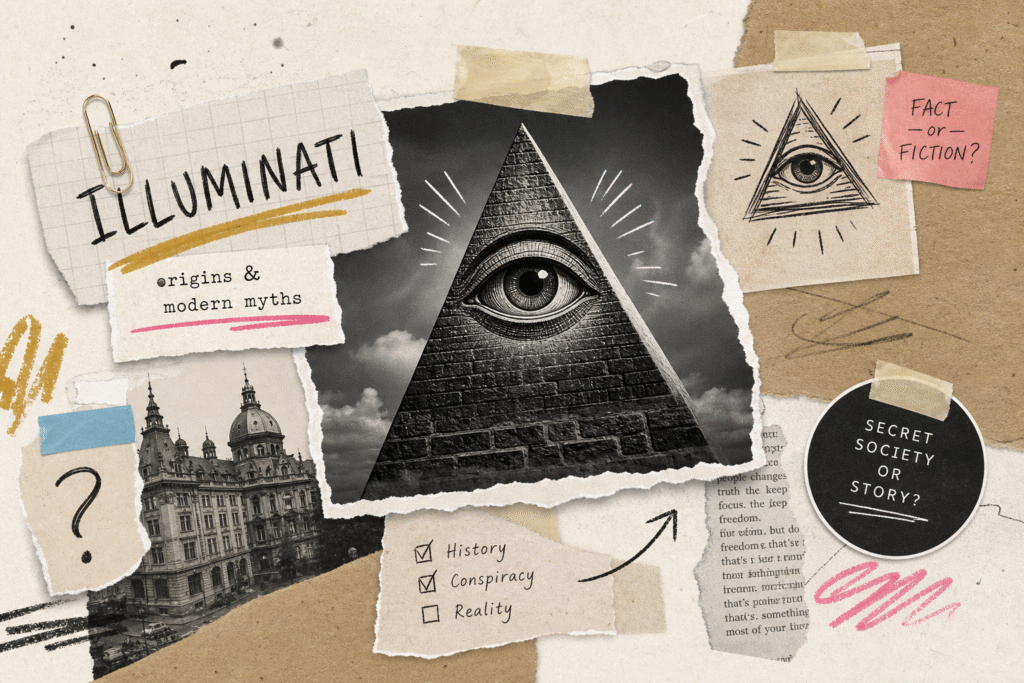
What to know about the Illuminati begins with a simple but rarely stated truth: most people carry a vivid mental image of the group, but very few can place it accurately in history. The Illuminati appears everywhere, the back of a dollar bill, a rapper’s music video, a late-night political forum, your uncle’s theory about who really runs the world. The mythology has grown so large that it swallowed the actual story beneath it. To really understand what to know about the Illuminati, one must delve into its historical context.
This article cuts through that noise. What follows is a direct, factual account of where the Illuminati came from, how it operated, why it was destroyed, and how it transformed into the global conspiracy shorthand it is today. At Illuminati Fraternities, we take the lore seriously precisely because we understand the history beneath it. If you want to engage with what to know about the Illuminati tradition intelligently, you start here. By the end, you will be able to separate what is documented from what is invented, and you will know where to go next.
The man who started it all: Adam Weishaupt and 1776 Bavaria
The journey into what to know about the Illuminati starts with understanding its origins more deeply.
On May 1, 1776, in Ingolstadt, Bavaria, a professor of canon law named Adam Weishaupt founded a secret society called the Order of the Illuminati. Weishaupt was Jesuit-educated but deeply shaped by Enlightenment philosophy, and the tension between those two forces defined everything about what he built. He believed that state power and church authority were actively suppressing rational thought, and that a covert network of educated men could push society toward reason-based governance without confronting those institutions head-on.
For those asking what to know about the Illuminati, it was a reflection of the Enlightenment era.
The Bavarian Illuminati was not a diabolical cult. It was, at its core, a reformist intellectual project rooted in Enlightenment secret society traditions. Weishaupt wanted to dismantle the grip of superstition on public life, reduce the political power of the clergy, and build a society ordered around Enlightenment principles. These were radical ideas for the time, but they were academic and philosophical in nature, not supernatural or sinister. That corrective context is what most accounts of the Illuminati leave out entirely.
In essence, what to know about the Illuminati reveals a struggle between reason and superstition.
How the historical Order operated and who it recruited
What to know about the Illuminati also involves its recruitment methods and intellectual aspirations.
The Order was structured as a layered initiation system with distinct grades. Members progressed through ranks including Novice, Minerval, and Illuminatus Minor before advancing into higher Masonic-linked degrees and the inner Mystery grades. Weishaupt used coded names, encrypted correspondence, and internal surveillance of members to maintain discipline and secrecy. The structure was meticulous, and that meticulous secrecy is exactly what made later observers so suspicious of it.
Historically, what to know about the Illuminati includes its intricate hierarchy and secrecy.
Recruitment happened largely through Masonic lodges, which is the direct reason the Freemasons and Illuminati became permanently linked in popular imagination. Weishaupt specifically targeted young men of education, wealth, or rank. At the Order’s peak, membership reportedly reached around 2,000 individuals, including academics, minor nobles, and social elites across parts of Europe. This selective, hierarchical model, an enlightened inner circle quietly guiding society, became the blueprint that every later conspiracy narrative would draw from. The “secret elite” framing did not emerge from thin air. It came from this real, documented structure.
This brings us to the heart of what to know about the Illuminati’s influence on society.
What to Know About the Illuminati: The Crackdown That Turned History Into Legend
The Illuminati did not survive long. Internal factionalism, loose-lipped members, and growing hostility from Bavarian authorities brought the Order down within roughly nine years of its founding. In 1785, the Bavarian government issued a formal edict banning the Illuminati and other secret societies. Adam Weishaupt was removed from his university post and exiled from Bavaria. Members were imprisoned or driven into exile.
For many enthusiasts, what to know about the Illuminati centers on its dramatic downfall.
What happened next is the detail most people miss. Bavarian authorities confiscated the Order’s internal papers and correspondence, then published them. The intention was to expose and discredit the group. The actual effect was the opposite: a ready-made archive of Illuminati documents, organizational details, and member communications became publicly available across Europe. Weishaupt’s own written defense of those documents added even more material to the record.
The suppression meant to erase the Illuminati instead handed future conspiracy theorists a rich primary source to work from. The real story ended in 1785 with a disbanded academic society, but the published evidence kept the narrative alive for centuries. For contemporary readers who want an accessible historical overview of the Bavarian Order, authoritative encyclopedic treatments remain helpful resources, see a concise Britannica entry on the Bavarian Illuminati for further reading: Bavarian Illuminati (Britannica).
What to Know About the Illuminati: Symbols and What They Actually Represent
There is much to learn about what to know about the Illuminati and the symbols it employed.
The Eye of Providence is probably the single most misunderstood symbol in this entire conversation. It is a Christian iconographic symbol representing God’s watchful presence, with roots in Renaissance and early modern European art that predate the Bavarian Illuminati by centuries. Its appearance on the U.S. Great Seal, and by extension the dollar bill, was designed to represent divine guidance over the new American nation.
Pierre Eugène du Simitière proposed it for the first Great Seal committee in 1776; Charles Thomson refined it in 1782. Neither man was encoding Illuminati allegiance. The official congressional meaning was Providence watching over the republic. For detailed notes on the Eye of Providence and its use on the Great Seal, specialist resources outline the symbol’s official meaning and provenance: Eye of Providence, GreatSeal.com.
For example, consider what to know about the Illuminati’s use of the Eye of Providence.
Great Seal symbolism extends to the unfinished pyramid, which follows the same logic. It represented national strength and the idea that America was still being built, not a hidden power structure. The pyramid itself is ancient Egyptian in origin, and its American usage carried no connection to the historical Order whatsoever. Other symbols regularly attributed to the Illuminati follow the same pattern:
Understanding what to know about the Illuminati means recognizing the cultural appropriation of its symbols.
- The owl was adopted by the historical Bavarian Illuminati as a reference to Minerva, the goddess of wisdom. It is a classical symbol of knowledge, not occult power.
- The obelisk originated in ancient Egypt as a monument to the sun god Ra, and was reused across centuries as commemorative architecture.
- Hand signs attributed to Illuminati members are, in documented cases, ordinary gestures, religious blessing signs, or stylistic choices with speculative reinterpretations layered on top.
To synthesize: almost every symbol labeled “Illuminati” in popular culture has a documentable origin that predates 1776 by decades, centuries, or millennia. The conspiracy attribution is the new layer, not the symbol itself.
From disbanded academic society to global conspiracy myth
To grasp fully what to know about the Illuminati, one must consider how it evolved into a myth.
The transformation of the Illuminati from a suppressed Bavarian order into a myth of global control happened in the 1790s, and two writers built the foundation. John Robison and Augustin Barruel published separate works claiming that the Illuminati had infiltrated Freemasonry and orchestrated the French Revolution.
Rather than reading the Revolution as the product of fiscal collapse, social inequality, and political crisis, they framed it as the outcome of a premeditated covert operation: secret organization, ideological infiltration, coordinated subversion, regime collapse. That causal structure became the model that virtually every later conspiracy theory would replicate.
Explorations of how Robison’s writings shaped later conspiratorial accounts are available in historical essays on the subject; one helpful essay on Robison and the origins of the conspiracy narrative is available here: John Robison and the birth of the Illuminati conspiracy (Public Domain Review).
The myths around what to know about the Illuminati have captivated generations.
The 19th century carried the narrative forward through anti-Masonic movements and fears about radical political change. The 20th century revived it again through claims linking the Illuminati to communism, global banking, and the emerging idea of a New World Order. Then came the explosion.
Hip-hop culture in the 1990s and 2000s brought Illuminati references into mainstream American entertainment, attaching celebrity culture to the mythology in a way that made it accessible, entertaining, and endlessly shareable. The internet did the rest. Today the Illuminati functions as a cultural shorthand for any perceived hidden power structure, and most contemporary claims share no traceable line back to the 1776 Bavarian order. The modern myth and the historical society are two entirely distinct things.
Ultimately, what to know about the Illuminati leads us to the intersection of fact and fiction.
What to Know About the Illuminati: Where History Stops and Lore Begins
Many people are curious about what to know about the Illuminati’s historical roots compared to its myths.
Here is the clear-eyed position the documented record supports: the historical Bavarian Illuminati was a real organization that existed for roughly nine years, was suppressed by regional authorities in 1785, and left a published paper trail. The version that supposedly controls celebrities, manipulates elections, and manages global finance is a separate cultural phenomenon with its own history, its own internal logic, and its own evolution across two centuries. Both deserve serious attention. They are not the same thing, and conflating them produces confusion rather than understanding.
Recognizing that distinction is a form of intellectual power. Why does this mythology persist across centuries? What does it reveal about how people process hidden power and social inequality? Those questions lead somewhere genuinely rich, and they are far more interesting than debating whether a triangle on a dollar bill is evidence of world domination. Engaging with the symbolism, the philosophy, and the esoteric tradition on its own terms opens up that deeper inquiry.
Inquiries about what to know about the Illuminati can lead to significant insights about society.
For readers who want to go further than a surface-level summary, Illuminations: Wisdom From This Planet’s Greatest Minds, published by Illuminati Fraternities, is the natural next step. It draws on a curated depth of philosophical and arcane knowledge that goes well beyond what a passing overview can offer, written for people who want to engage seriously with the esoteric tradition this mythology draws from. It is the bridge between casual curiosity and genuine understanding.
For those eager to learn more, what to know about the Illuminati can be explored in greater detail.
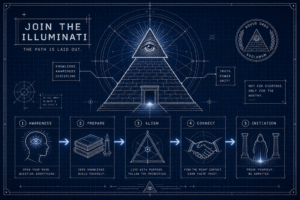
Key facts about the Illuminati, and where to go next
If you want a concise summary of what to know about the Illuminati, remember this: the real history and the popular myth are two different stories, and both are worth knowing. A real reformist secret society was founded in Bavaria in 1776 by a professor with Enlightenment convictions. It was suppressed within a decade and its documents published by the very government that banned it. Then, over the following two centuries, it was reborn as a global conspiracy narrative, built by writers, musicians, internet culture, and the persistent human need for a hidden explanation of visible events.
In conclusion, what to know about the Illuminati is about understanding its dual legacy.
Understanding the symbols and their actual origins is the first step toward reading the modern world more clearly. The Eye of Providence belongs to a centuries-old Christian tradition. The pyramid belongs to ancient Egypt and American nation-building mythology. The owl belongs to the goddess of wisdom. None of these symbols were created by or for a group of Bavarian academics in 1776, and knowing that changes what you see when you encounter them.
To truly grasp what to know about the Illuminati, one must look beyond the surface of its symbols.
For those who want to go deeper into the symbolism, the philosophy, and the esoteric tradition beneath the mythology, the library at Illuminati Fraternities is where that conversation continues. The door is open.
Exploring what to know about the Illuminati opens doors to a wealth of knowledge.
Frequently Asked Questions About the Illuminati
Finally, what to know about the Illuminati should include its contemporary relevance.
What to know about the Illuminati in one sentence?
The historical Illuminati was a Bavarian Enlightenment secret society founded in 1776 and dissolved by 1785; everything else is mythology built on top of that brief, documented reality.
In a single phrase, what to know about the Illuminati encapsulates a complex historical narrative.
Did the Illuminati really control governments or world events?
No documented evidence supports those claims. The historical Order had roughly 2,000 members concentrated in parts of Europe and was disbanded within nine years. Claims of ongoing global control emerged centuries later from popular writers and cultural mythology, not from historical records.
Many ask what to know about the Illuminati’s influence over historical events and conspiracy theories.
What does the Eye of Providence actually mean?
The Eye of Providence is a Christian symbol representing divine watchfulness. It appeared in European religious art long before 1776 and was placed on the U.S. Great Seal to represent Providence overseeing the new republic, not to signal Illuminati allegiance.
Understanding what to know about the Illuminati involves dissecting its many interpretations.
Is the Illuminati connected to the Freemasons?
Ultimately, what to know about the Illuminati is a blend of history and mythology.
The historical Bavarian Illuminati recruited through Masonic lodges, which is how the two organizations became linked in popular imagination. They were distinct organizations, but their overlapping membership in the 18th century gave later conspiracy writers material to build on.
