
Uncategorized
Who Are the Illuminati? Origins, Members, and Truth
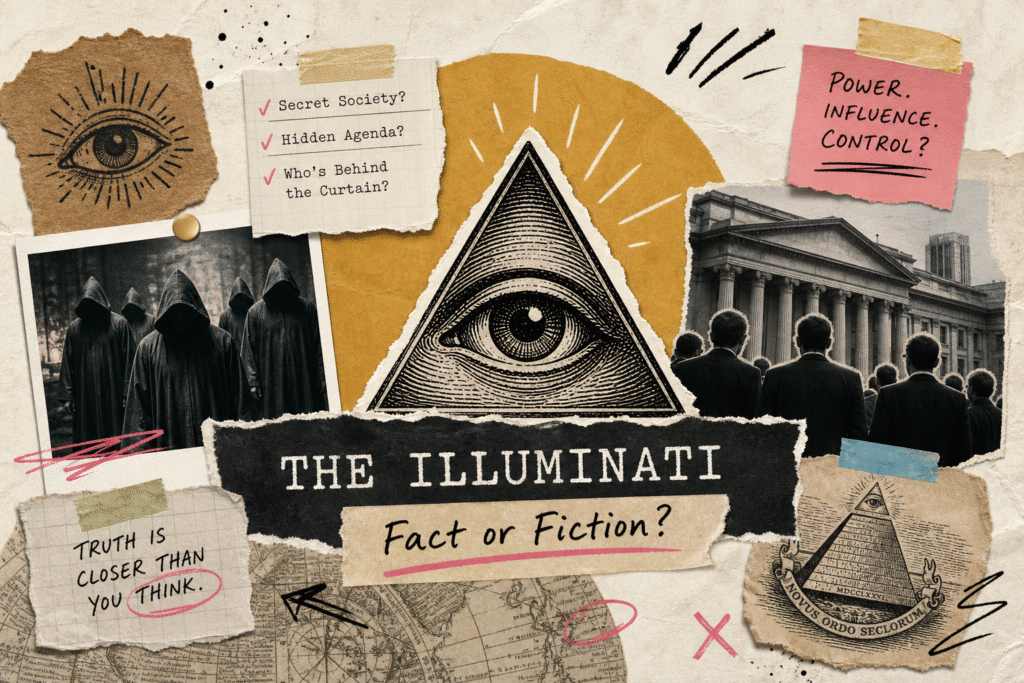
The question has outlasted kings, revolutions, and every conspiracy theory it ever got attached to: who, exactly, are the Illuminati? Most people hold a strong opinion before they’ve read a single primary source. They’ve seen the hand gestures in music videos and heard the name dropped in hip-hop lyrics. They’ve assembled a picture entirely from secondhand speculation.
The inquiry into who are the Illuminati has fascinated individuals for centuries, leading to numerous interpretations and theories.
This article goes both directions at once. It starts with the documented, verifiable history of a real organization founded in Bavaria in 1776. It traces how that organization was suppressed, mythologized, and eventually became the defining secret society of modern imagination.
Ultimately, understanding who are the Illuminati involves not just the historical narrative but also the ongoing cultural impact.
The man who started it all: Weishaupt and the 1776 founding
The Ingolstadt classroom where it began
On May 1, 1776, Adam Weishaupt gathered a small circle of men in Ingolstadt, Bavaria. He named them the Order of the Illuminati. Weishaupt was a professor of canon law at the University of Ingolstadt. His frustrations were specific: religious authority controlled academic life. The Enlightenment ideas spreading across Europe had no safe institutional home. He believed, genuinely and urgently, that reason could replace superstition as the organizing principle of society.
Many still wonder, who are the Illuminati in today’s society? The question remains relevant as new theories emerge.
Why a professor turned to secrecy
Weishaupt didn’t begin with elaborate rituals or mystical hierarchy. He started with a structure borrowed from Jesuit discipline and adapted it for radical reform.
Who are the Illuminati? The real membership roster
To many, the question of who are the Illuminati becomes a lens through which to view modern conspiracies.
Lawyers, philosophers, and a disputed poet
The documented membership reads like a directory of ambitious 18th-century European intellectual life. Xavier von Zwack served as Weishaupt’s deputy and was a diplomat and lawyer by profession.
The identity of who are the Illuminati continues to spark debate among historians and conspiracy theorists alike.
What the membership list actually tells us
The Illuminati were not kings or central bankers. They were professors, lawyers, civil servants, minor nobles, astronomers, and writers.
Understanding who are the Illuminati offers insights into the fears and hopes of society across generations.
What they wanted: goals, structure, and the symbolism of the Order
Enlightenment ideals dressed in ritual
The Illuminati’s stated goals are well-documented in their own internal writings. They opposed superstition, sought to reduce religious control over public life, resisted abuses of state power, and promoted reason and moral virtue as organizing principles for society.
Many ask who are the Illuminati and why the organization sparked such a wide array of reactions.
The symbols they actually used and what they meant
The best-documented symbols of the original order are the Owl of Minerva, representing wisdom, and a dot within a circle, an early form of the all-seeing eye concept. The pyramid and the Eye of Providence so widely associated with Illuminati iconography today come from a broader esoteric tradition, not exclusively from Weishaupt’s Bavarian group. This distinction matters historically, but it doesn’t diminish the symbolic power those images carry. At Illuminati Fraternities, the philosophical framework is built around the Eye, the Pyramid, and the Eternal Circle as living symbols of aspiration, hidden knowledge, and the enduring pursuit of enlightenment. The symbols outlived the organization because they encode something real about human ambition and the search for meaning.
The symbols of who are the Illuminati represent not just the group but the ideas they sought to promote.
The suppression that didn’t kill the story
The 1785 crackdown and what the records show
The Bavarian government issued a sweeping edict on March 2, 1785. This banned secret societies. Weishaupt lost his professorship and was banished from Bavaria. In 1786 and 1787, authorities seized and published the order’s internal correspondence. This was a deliberate strategy to expose and humiliate the group publicly.
Why disbanding on paper means nothing to a myth
Asking who are the Illuminati has led to various interpretations. Each interpretation reveals something about societal fears.
Publishing the confiscated documents was supposed to kill the story. It did the opposite. A secret society persecuted by both the monarchy and the church becomes, in the public imagination, a society that must have been doing something right. The suppression handed future conspiracy theorists a paper trail they could interpret however they wished, full of coded language, private correspondence, and organizational charts that looked, to hostile readers, like evidence of exactly the global menace critics had always claimed. Martyrdom is more powerful than survival. The Illuminati became, in a meaningful sense, more influential after their dissolution than they ever were while operating.
How a dead order became history’s greatest conspiracy
The books that rewrote the narrative
Historians often debate who are the Illuminati. They question the validity of various claims made over centuries. Two publications in 1797 did more to shape the modern Illuminati myth than anything Weishaupt himself wrote. John Robison’s Proofs of a Conspiracy and Abbé Barruel’s multi-volume Memoirs Illustrating the History of Jacobinism both argued the same essential claim: the Illuminati had survived suppression, infiltrated Freemasonry, and used Masonic networks to engineer the French Revolution from behind the scenes.
Two publications in 1797 did more to shape the modern Illuminati myth than anything Weishaupt himself wrote. John Robison’s Proofs of a Conspiracy and Abbé Barruel’s multi-volume Memoirs Illustrating the History of Jacobinism both argued the same essential claim: the Illuminati had survived suppression, infiltrated Freemasonry, and used Masonic networks to engineer the French Revolution from behind the scenes. For conservative readers already traumatized by the Revolution’s violence and anti-religious fervor, this narrative offered something enormously appealing, an explanation. Chaos, they suggested, wasn’t chaos at all. It was coordination by hidden elites. That idea, once planted, proved nearly impossible to uproot. For a modern treatment of Robison’s role in creating the conspiracy narrative, see the essay on John Robison and the birth of the Illuminati conspiracy.
Why the Illuminati absorbed every fear that followed
To answer who are the Illuminati requires a careful analysis of both historical and modern contexts.
Print culture, sermons, and political pamphlets amplified the original claims until the Illuminati became a template for explaining any political development that frightened or confused people.
What modern initiates say about the Illuminati’s true mission
The philosophical content that speaks for itself
This is important context for understanding who are the illuminati today. It offers insights into the perspectives surrounding them.
The most honest answer to the question of who the Illuminati are in 2026 doesn’t come from academics or journalists. It comes from people who have actually engaged with the living philosophy the original Order represents. At Illuminati Fraternities, the published philosophical framework addresses the Globalist Agenda as a genuine vision for human prosperity, not a fear-mongering slogan. The Maze of Existence functions as a meditation on individual purpose within larger systems of power and history. The Pendulum of Power provides a framework for understanding how influence moves through human civilizations over time. These aren’t conspiracy talking points. They are esoteric philosophy in the direct tradition of the Enlightenment thinkers who shaped Weishaupt’s original circle. The Illuminations eBook, a curated collection of wisdom from influential minds across history, serves as an accessible entry point for readers who want to go deeper than surface-level speculation.
Ultimately, those who study who are the Illuminati find layers of meaning that extend beyond simple definitions.
Who are the Illuminati today? What members most often report
What initiates most often describe isn’t access to secret handshakes or promises of overnight wealth. It’s something more grounded and, ultimately, more useful: a sense of belonging to something larger than themselves.
Members often emphasize that understanding who are the Illuminati is a journey into deeper philosophical realms.
This exploration into who are the illuminati reveals a journey that many find meaningful.
Separating history from myth, and choosing your own answer
The question of who the Illuminati are has at least two honest answers. The historical one is precise: a reform-minded Enlightenment secret society, founded by Adam Weishaupt in Bavaria in 1776. It was suppressed by government action in 1785 and dissolved as an organization by the time its own documents were published in 1787.
The multifaceted answers to who are the Illuminati reflect the varied perspectives held by society.
Separating fact from myth in this space requires exactly the kind of clear, disciplined thinking the original Illuminati claimed to champion. Most sources offer one extreme or the other: breathless confirmation of every shadow government theory, or dismissive debunking that treats the entire subject as beneath serious consideration. Neither serves you well. For quick clarifications and common questions, consult our FAQs, Illuminati Fraternities. The history is real, the philosophy is serious, and the questions the Order raised in 1776 remain genuinely unresolved.
If the question still pulls at you, Illuminati Fraternities offers something rare: a place to explore it from the inside, with access to philosophical content, a genuine membership community, and a symbolic tradition connecting directly to the Enlightenment roots of the original Order. The door is open to those who seek it with genuine curiosity. Explore the membership portal (see our Privacy Policy, Illuminati Fraternities) and read the Illuminations eBook, then decide for yourself what the Illuminati mean to you.
Ultimately, the multifaceted answers to who are the Illuminati reflect the varied perspectives held by society.
Many seek to join the conversation about who are the Illuminati, exploring their own interpretations and beliefs.
In conclusion, understanding who are the illuminati is essential for grasping the complexities surrounding this topic.
